
Blog

Common Starting Issues in Pre-Owned Vehicles and Their Solutions

Discover common starting issues in pre-owned cars, like battery and ignition problems, and learn solutions for reliable used cars in Rockville Centre.

Used cars can be a smart choice for drivers who want value, reliability, and a vehicle that’s already broken in. Whether you’ve just bought a pre-owned vehicle or have been driving one for years, you probably chose it because it made sense financially and fit your lifestyle. And while many used cars hold up incredibly well, they sometimes come with quirks that newer models don’t have, starting issues being one of them.

Fall’s cooler mornings in Rockville Centre can make starting problems even more noticeable. A quiet click when turning the key or your engine struggling to turn over can really mess with your day. But those signs usually come with some clues before things get worse. Knowing what to watch for and what usually causes these problems can help you avoid being stuck with a car that won’t start. Let’s look at some of the more common reasons your pre-owned car might not start and what can be done about them.

Battery Problems

The battery is often the first place to check when a car doesn’t start. That’s because it plays a direct role each and every time you turn the key or press the start button. Over time, pre-owned vehicles may start to develop issues linked to battery age or how the previous owner treated the car.

Even if the battery isn't completely dead, it might still hold less charge than it used to. That means it needs more time or extra tries to crank the engine, especially during the cooler temperatures of October in Rockville Centre. This hesitation can easily be missed until one day, it doesn’t turn over at all.

Some signs that your battery might be on its way out:

  • Engine cranks slowly or takes longer than usual to start
  • Clicking sound when trying to start the engine
  • Interior lights seem dim when the vehicle is off
  • Car starts fine one day but not the next
  • Check battery light may pop up on the dash

If any of these sound familiar, the issue could be your battery. But it's not just about replacing it blindly. Sometimes it's the terminals that are corroded. Other times it's the alternator not charging the battery well enough to keep it healthy. That’s why testing is always a good move. A professional can check how much life the battery has left and whether replacement is actually needed. If so, they’ll swap it out with the right fit for your make and model, getting you back on the road with peace of mind.

Starter Motor Issues

So, what happens if the battery checks out fine, but your car still won't crank? The next place to look is the starter motor. This part does exactly what it sounds like, it helps get the engine going when you turn the key. Over time, especially on a vehicle with some mileage, the starter can wear down.

A worn starter might not fail all at once. It may begin by hesitating or requiring multiple key turns before it finally kicks in. Here’s what you might notice:

  • A single, loud click when trying to start the car
  • Grinding noise if the starter gear doesn’t disengage
  • Engine won’t turn even when lights and electronics work
  • You need a jumpstart frequently, but the battery is OK

In some cases, the connections going to the starter are loose or corroded. In others, the motor itself is burned out from regular use. Since it’s buried under other engine components, diagnosing or replacing it on your own isn’t realistic. A technician can track down the problem correctly and safely, saving you time and the stress of guessing.

Now let’s move on to another part that doesn’t always get much attention but plays a big role in getting your engine running each morning.

Faulty Ignition Switch

If you turn the key and nothing happens, or if your dash lights flicker for a second and then go dark, the ignition switch could be to blame. This switch sends power to your vehicle’s electrical systems, including the engine starter. When it stops working right, it can prevent your car from starting even though the battery and starter are totally fine.

Wear and tear over time is usually responsible for ignition switch issues. Dust buildup and repeated use can wear down the contacts inside the switch, especially on older cars. In some cases, jiggling or holding the key in place starts the vehicle until eventually that trick doesn't work either.

Common signs that point to a faulty ignition switch include:

  • No response when turning the key, even with a good battery
  • Stalling right after ignition
  • Flickering dash lights
  • Trouble turning the key or keeping it in the on position

Although these may seem like random glitches, they usually connect back to a faulty switch. Diagnosing the issue isn’t as simple as replacing the key or lubricating the cylinder. The whole switch unit might need to be replaced, and getting it right means removing panels and working around the steering column. It’s a job better left to trained technicians who can install the part correctly and check that the electrical system is working the way it should once the new switch is in place.

Fuel System Problems in Used Cars

When the battery and electrical components check out, but your engine still won’t start, the fuel system should be next on the list. A car needs the right amount of clean fuel delivered at the proper pressure for the engine to fire. With pre-owned vehicles, age or inconsistent maintenance can cause blockages or failure in this system.

The most common issues involve the fuel pump or fuel filter. Over time, the filter collects dirt and debris to prevent it from reaching the engine, but when it gets clogged, fuel can’t flow freely. A tired or failing fuel pump might struggle to deliver fuel at all. Fall is a time when these issues stand out more, as cooler mornings can cause added strain on older systems.

You might notice:

  • Engine turns over but doesn’t start
  • Sudden drops in engine performance
  • Trouble starting when the tank is below a quarter full
  • Jerking or stalling while driving

Fuel system problems often get mistaken for battery or ignition issues. That’s why it’s smart to have everything checked by a professional who can accurately tell where the problem is. Testing fuel pressure, inspecting lines, and replacing filters or pumps when needed can help return your car to reliable condition. Ignoring it only leaves you frustrated on a cold morning when the engine refuses to start.

How You Can Keep Starting Issues From Coming Back

Used vehicles offer plenty of value, but understanding where starting problems stem from can spare you a headache down the road. Whether it's a weak battery, bad starter, worn ignition switch, or something in the fuel system, small signs often come before bigger problems. If something feels off, even slightly, it’s worth getting checked before it turns into a no-start situation.

Staying on top of small fixes and having a professional handle inspections can keep your car in shape well into the future. In Rockville Centre, the fall season is a good time to get ahead of issues before winter hits. That’s when cold weather can put even more pressure on older parts.

Catching these problems early helps build confidence in your used car. You rely on it to get you where you need to go. And with the right care, it’ll keep doing just that.

Whether you're dealing with battery concerns, ignition troubles, or fuel system hiccups, addressing these issues early ensures a smoother ride. If you're searching for something dependable this season, take a look at our used cars in Rockville Centre. Nissan of Rockville Centre is here to help you find the right fit for your lifestyle and keep you ready for the road ahead.
Recommended Posts

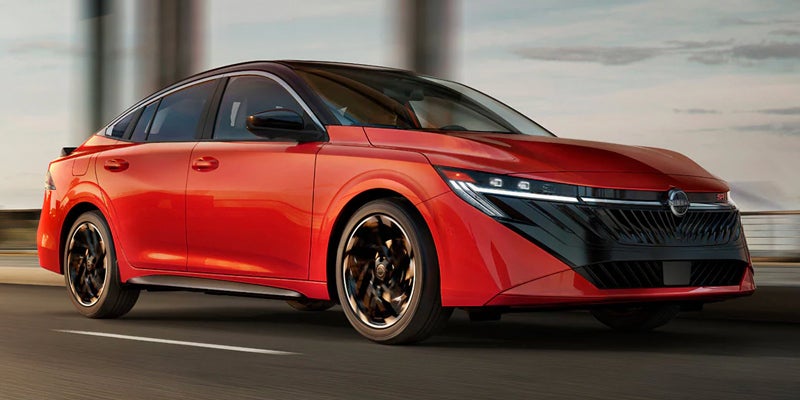
2027 Nissan Sentra red sedan exterior view

2027 Nissan Sentra vs. 2026 Altima: Compact Efficiency or Midsize Muscle?

The traditional sedan hasn't disappeared; it's simply become easier to understand. The 2027 Nissan Sentra ® is the smaller and more economical of these 2 Nissan sedans, while the 2026 Nissan Altima ® provides more power, a little more passenger and luggage space, and available Intelligent AWD. Both seat 5, both use an Xtronic CVT®, and both offer the sort of driver-assistance technology once associated with considerably more expensive cars. For Rockville Centre, NY, drivers, the decision comes down to what you value most during the miles you cover every week. Sentra Makes 149 HP Go a Long Way The redesigned 2027 Sentra uses a 2.0L 4-cylinder producing 149 hp and 146 lbs. ft. of torque, with FWD standard throughout the range. S and SV models achieve up to an EPA-estimated 30 city/38 highway/33 combined MPG, which makes Sentra particularly appealing for drivers spending much of their time commuting. The redesign has also transformed the dashboard. A 12.3-inch touchscreen is standard with wireless Apple CarPlay® and Android Auto™ compatibility, while available dual 12.3-inch displays place a digital dashboard alongside it. Nissan Safety Shield® 360 and Intelligent Cruise Control are standard, with available ProPILOT Assist, Intelligent Around View® Monitor, Bose® premium audio, and heated front seats adding some surprisingly grown-up equipment to Nissan's compact sedan. Altima Adds Power and the Option of AWD The 2026 Altima moves things up a size and gives its 2.5L 4-cylinder more muscle. FWD models produce 188 hp and 180 lbs. ft. of torque, while Intelligent AWD versions produce 182 hp and 178 lbs. ft. of torque. That's a 39 hp advantage for the FWD Altima over Sentra, something likely to be more noticeable during highway merging and passing than it is while sitting in Long Island traffic. FWD Altima models achieve an EPA-estimated 26 city/36 highway/30 combined MPG, while AWD versions return 25 city/33 highway/28 combined MPG. The key distinction is Intelligent AWD itself. Sentra is exclusively FWD, while Altima gives drivers another drivetrain option for wet and snowy conditions. The Size Difference Is Smaller Inside Than You Might Expect Calling Sentra compact and Altima midsize makes them sound as though they're separated by an enormous gulf, yet the interior figures tell a subtler story. Altima provides 100.6 cu. ft. of passenger volume without the available moonroof and 35.2 inches of rear legroom, while Sentra provides 34.8 inches of rear legroom. That's just 0.4 inch separating them in that measurement. Altima's trunk holds 15.4 cu. ft. compared with 14.3 cu. ft. in Sentra, and both provide folding rear seats for longer items. Altima remains the larger car, but Sentra extracts an impressive amount of passenger space from its smaller footprint. Sentra Has the Newer Digital Cabin Both sedans include Nissan Safety Shield® 360, bringing technologies such as Automatic Emergency Braking with Pedestrian Detection, Blind Spot Warning, Lane Departure Warning, Rear Cross Traffic Alert, and High Beam Assist. The redesigned Sentra has the advantage of Nissan's newer dashboard architecture, starting with its standard 12.3-inch touchscreen and extending to the available dual 12.3-inch display arrangement. Altima offers its own available connectivity and convenience technology depending on trim and package, but its more distinctive advantage isn't another screen. It's the availability of Intelligent AWD, something Sentra simply doesn't offer. The Better Fit Depends on Your Priorities These 2 sedans are close enough in rear passenger and trunk space that choosing solely by vehicle class misses the more important differences. Sentra offers up to an EPA-estimated 33 combined MPG, a newer digital interface, 149 hp, and compact exterior dimensions. Altima trades some fuel economy for up to 188 hp, a 15.4-cu. ft. trunk, slightly greater rear legroom, and the option of Intelligent AWD. In other words, Sentra concentrates on efficiency and modern technology, while Altima puts greater emphasis on power, space, and drivetrain choice. Neither approach is complicated, which is refreshing in an era when selecting a car can sometimes feel like configuring a telecommunications satellite. Compare Sentra and Altima at Nissan of Rockville Centre Drivers around Rockville Centre, NY, can visit Nissan of Rockville Centre to browse new Nissan Sentra and Altima inventory, compare available trims and features, explore FWD and Intelligent AWD configurations, review financing options, value a trade-in, or schedule a test drive online today. Driving the 2 back-to-back is the best way to discover if Sentra's smaller, more efficient approach fits your Long Island routine or if Altima's extra power and available AWD better suit the miles ahead.

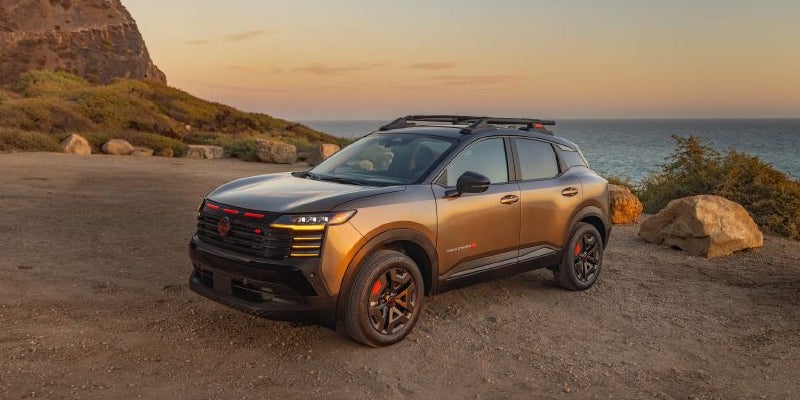
2027 Nissan Kicks SUV exterior view by coastline

2027 Nissan Kicks: Small SUV, Surprisingly Big Numbers

There is something pleasing about a car that understands its job. The 2027 Nissan Kicks ® isn't trying to tow a yacht or cross a desert. It's a compact, 5-passenger SUV measuring just 171.9 inches long, with available Intelligent AWD, up to 60.0 cu. ft. of maximum cargo capacity, and fuel economy reaching an EPA-estimated 31 combined MPG in FWD form. For Rockville Centre, NY, drivers dealing with busy roads, tight parking spaces, highway commutes, and Northeast winters, being small without feeling compromised has its advantages. 141 HP Is Plenty When You're Only 171.9 Inches Long Every 2027 Kicks uses a 2.0L 4-cylinder producing 141 hp and 140 lbs. ft. of torque, paired with an Xtronic CVT®. FWD is standard, while Intelligent AWD is available across S, SV, and SR, so additional traction isn't reserved for buyers choosing the most expensive trim. FWD models achieve up to an EPA-estimated 28 city/35 highway/31 combined MPG. Intelligent AWD continuously monitors driving conditions and can distribute power when additional traction is needed, while Snow Mode adds another setting for slippery conditions. This isn't an off-road system pretending the Kicks is something enormous and heroic. It's traction technology aimed squarely at wet roads, snow, and the sort of weather Long Island can produce at inconvenient moments. Compact Outside Doesn't Mean Tiny Inside The Kicks seats 5 and provides 42.7 inches of front legroom, but cargo capacity changes depending on drivetrain and trim. S FWD provides 30.0 cu. ft. behind the second row and 60.0 cu. ft. with it folded, while SV and SR FWD models offer 29.2 and 58.5 cu. ft., respectively. AWD reduces those figures to 23.9 cu. ft. behind the second row and 50.1 cu. ft. with it folded. That's an important tradeoff to understand before choosing a drivetrain: AWD adds traction capability, while FWD preserves more cargo volume. Either way, Nissan has managed to extract considerable interior space from an SUV shorter than many midsize sedans. The Dashboard Has Grown Up Considerably A 12.3-inch touchscreen is standard for 2027, accompanied by wireless Apple CarPlay® and Android Auto™ compatibility. SR adds a 12.3-inch digital dashboard, creating a wide dual-display arrangement across the front of the cabin. Available wireless phone charging removes another cable from circulation, while an available panoramic moonroof opens up the cabin visually. There's even an available 10-speaker Bose Personal® Plus audio system with speakers integrated into the front headrests, which sounds faintly ridiculous until you realize that having music delivered near your ears is, from an engineering perspective, quite a logical place to put speakers. Driver Assistance for Traffic, Highways, and Parking Lots Nissan Safety Shield® 360 is standard on the 2027 Kicks and bundles several driver-assistance technologies designed to improve awareness around the SUV. Available Intelligent Around View® Monitor creates a virtual 360-degree perspective around the vehicle, an especially handy feature when navigating crowded parking areas. SR also includes ProPILOT Assist, a hands-on system that combines Intelligent Cruise Control with steering assistance to help manage following distance and lane positioning during compatible highway driving, including stop-and-go traffic. It doesn't drive the Kicks for you, but it can reduce some of the repetitive work involved in a congested commute. S, SV, and SR Keep the Choices Straightforward Kicks S establishes the lineup with its 12.3-inch touchscreen, wireless smartphone integration, and Nissan Safety Shield® 360, while SV adds additional convenience and technology equipment. SR sits at the top with a 12.3-inch digital dashboard, ProPILOT Assist, 19-inch machine-finished aluminum-alloy wheels, and access to additional premium features. More importantly for Northeast drivers, Intelligent AWD is available on all 3. You can therefore choose the equipment level that fits your needs without climbing the entire trim ladder simply because you'd like extra traction when winter arrives. Explore the 2027 Nissan Kicks in Rockville Centre The 2027 Kicks makes a straightforward case for itself: 141 hp, available Intelligent AWD, up to an EPA-estimated 31 combined MPG, and as much as 60.0 cu. ft. of maximum cargo capacity packaged into a 171.9-inch SUV. Drivers around Rockville Centre, NY, can visit Nissan of Rockville Centre to browse new Nissan Kicks inventory, compare S, SV, and SR trims, explore FWD and Intelligent AWD models, review financing options, value a trade-in, or schedule a test drive online today.

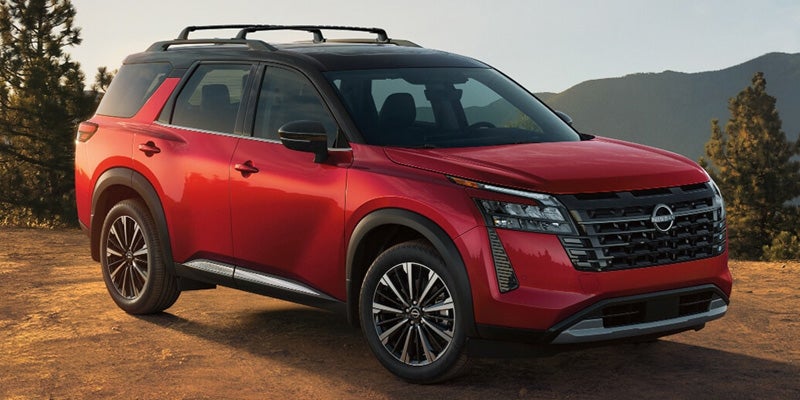
2026 Nissan Pathfinder red SUV parked outdoors with mountain backdrop

2026 Nissan Pathfinder: Third-Row Space and Towing for South Shore Families

A family SUV succeeds or fails largely through packaging. A third row has to be accessible, cargo space needs to remain flexible, and the vehicle can't become cumbersome simply because more people are coming along. The 2026 Nissan Pathfinder ® addresses those requirements with seating for up to 8, as much as 80.5 cu. ft. of cargo capacity, a V6 powertrain, and up to 6,000 lbs. of towing capability when properly equipped. For Rockville Centre, NY, families, it's a midsize SUV designed around carrying people without forgetting that people tend to bring an astonishing amount of stuff with them. A Third Row Designed to Be Part of the Cabin The Pathfinder's third row isn't simply there to produce a larger passenger-count figure. Seating for up to 8 gives families room for children, friends, or additional adults, while the interior layout is designed to make reaching the rear easier. Fold both rear rows and maximum cargo capacity expands to 80.5 cu. ft., giving the Pathfinder the flexibility to switch from passenger carrier to substantial cargo hauler. That adaptability is important because family vehicles rarely perform one job at a time. A week's school bags and groceries can become a weekend's luggage and sports equipment remarkably quickly. A V6 With 6,000 Lbs. of Towing Capability The 2026 Pathfinder uses a 3.5L V6 producing 284 hp and 259 lbs. ft. of torque, paired with a 9-speed automatic transmission. It's a straightforward powertrain choice for a vehicle expected to carry passengers and occasionally pull something substantial behind it. Properly equipped, the Pathfinder can tow up to 6,000 lbs., giving families the capacity to bring along a compatible boat, camper, or recreational trailer. That figure also separates Pathfinder from many family crossovers whose towing ambitions end considerably earlier. For drivers who need their SUV to handle weekday transportation and weekend equipment, the additional capability can make a significant difference. Flexible Seating Beats Clever Design Tricks Good family-car design often consists of things nobody notices until they're missing. Pathfinder provides flexible rear seating so passenger and cargo space can be rearranged as the trip demands, while storage areas, cupholders, and cabin compartments give smaller items somewhere to live besides the floor. Second-row passengers can also access their own charging and climate features, helping the rear of the cabin function as its own passenger space instead of an extension of the front seats. Keep all 3 rows in service when people take priority, fold the third when luggage takes over, or lower both rear rows when maximum cargo capacity is required. It's uncomplicated design, which is often the cleverest kind. Technology That Doesn't Forget the Driver The Pathfinder's technology is designed to support the trip instead of dominating the dashboard. Available features include a 12.3-inch touchscreen infotainment system, wireless Apple CarPlay® and Android Auto™ compatibility, and Wi-Fi hotspot capability, depending on configuration. Driver-assistance technology can include Automatic Emergency Braking, Blind Spot Warning, and Rear Cross Traffic Alert, with equipment varying by trim. These systems are particularly relevant in a family SUV, where the driver's attention may already be competing with several conversations and a request from the third row that somehow becomes urgent precisely as traffic gets complicated. The Pathfinder's Strength Is the Combination Plenty of midsize SUVs offer 3 rows. Pathfinder becomes more interesting when its passenger capacity is considered alongside its cargo and towing figures. It can seat up to 8, provide as much as 80.5 cu. ft. of cargo capacity with both rear rows folded, and tow up to 6,000 lbs. when properly equipped. The 284 hp V6 and 9-speed automatic provide the mechanical foundation, while flexible seating allows the cabin to change with the day's passenger and cargo requirements. It's less about any single headline feature and more about designing the pieces to work together. Explore the 2026 Pathfinder at Nissan of Rockville Centre Families around Rockville Centre, NY, can visit Nissan of Rockville Centre to browse new Nissan Pathfinder inventory, compare available trims and seating configurations, explore towing and driver-assistance equipment, review financing options, value a trade-in, or schedule a test drive online now. For families who need a genuine third row without surrendering cargo flexibility or the ability to tow a substantial trailer, the 2026 Pathfinder presents a well-rounded approach to the job.